
Connect with the KBI
Follow the Kansas Bureau of Investigation on social media for agency updates, public safety information, news releases, community outreach, and other important announcements.
Stay connected to learn more about the KBI’s upcoming initiatives and work across Kansas.
FAQ
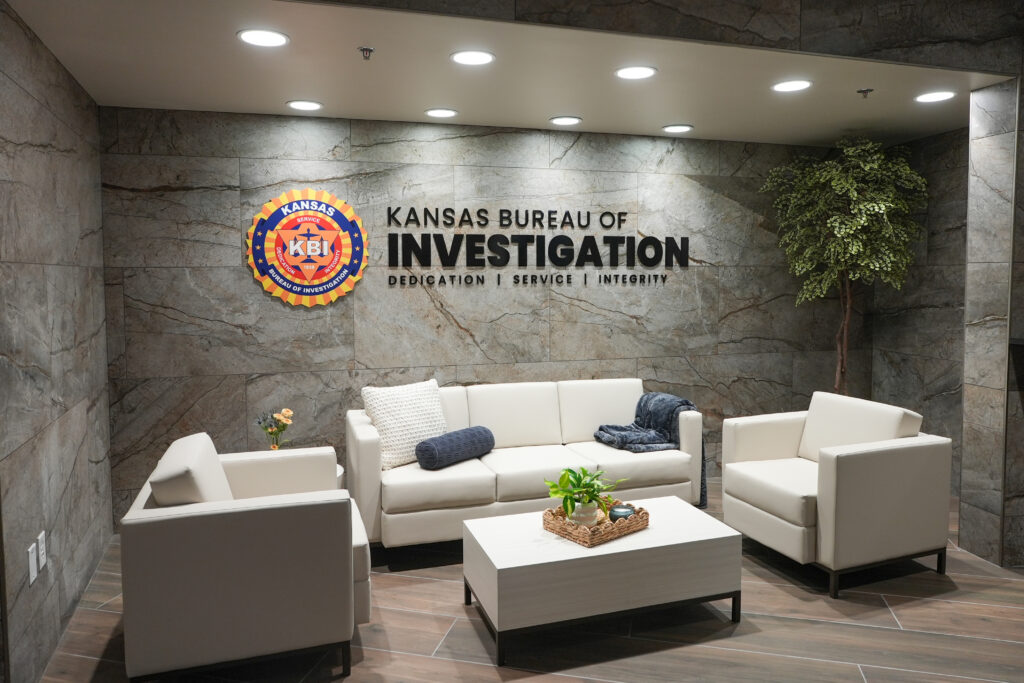
The Kansas Bureau of Investigation (KBI) is the statewide criminal investigative agency for the state of Kansas. As a division of the Kansas Attorney General’s Office, the KBI is led by a director appointed by the Attorney General. The agency has statewide jurisdiction to provide investigative assistance and expertise to local law enforcement agencies handling complex criminal activity. Additionally, the KBI provides forensic science services and expert testimony to the state’s criminal justice community, maintains criminal history records and crime statistics, manages the offender registry, and delivers statewide information services.
The KBI investigates major violent crimes, including homicides, rapes, and aggravated assaults. Special agents also investigate crimes against children, public corruption, cybercrime, officer-involved shootings, and in-custody deaths of inmates. The agency also has specialized units that focus on disrupting narcotics manufacturing and distribution and targeting organized criminal offenders.
Unlike local law enforcement agencies, the KBI does not initiate cases based directly on citizen complaints, reports, or allegations. Investigations originate after a request for assistance from a local law enforcement agency, a county or district attorney, or the Kansas Attorney General. Additionally, the KBI's statewide jurisdiction provides the legal authority to initiate independent investigations when any state law has been violated or threats to public safety emerge.
No. Local law enforcement agencies operate independently and are not under the KBI’s administrative or operational authority. Individuals who experience police misconduct should consider reporting it to the law enforcement agency that employs the officer so they can investigate the matter. If your concern is not appropriately resolved, you can contact the city council, county commission, or other city or county officials with authority over the police department or sheriff’s office. Additionally, criminal violations can be reported to the county or district attorney’s office of jurisdiction.
The KBI is led by a director, associate director, and three assistant directors who oversee the investigations branch, criminal justice services branch, and administration branch. The investigations branch operates across three geographic regions: northeast, southeast and west. Headquartered in Topeka, the KBI maintains regional field offices in Wichita, Lenexa, Great Bend, Pittsburg, and Garden City. It has, along with forensic science laboratories located in Topeka, Kansas City, Great Bend, and Pittsburg.
No. KBI laboratories conduct examinations of evidence free of charge for any law enforcement agency or prosecutor across all 105 Kansas counties.
No. Several distinct state agencies serve Kansas within specific jurisdictions:
The Kansas Highway Patrol (KHP) enforces speeding, occupant protection, impaired driving, and other traffic laws, investigates vehicle crashes, and interdicts illegal narcotics on roadways.
The Kansas Department of Wildlife and Parks enforces laws related to Kansas hunting, fishing, conservation, and outdoor recreation.
The Kansas State Fire Marshal investigates the cause and origin of fires.
A few other state agencies have investigators who serve the state of Kansas.
No. These cases are typically investigated by the Public Protection Division of the Kansas Attorney General’s Office.
Questions related to the prosecution of a case or when court hearings are scheduled should be directed to the county or district attorney with jurisdiction, or the district court of jurisdiction. You can search for court hearing dates or locate district courts by county at Kansas Judicial Center - KS Courts.