
If you are law enforcement and think you may have a child abduction, immediately call the KBI IT Service Desk at (785) 296-8262 to speak to a coordinator and start AMBER Alert activation.
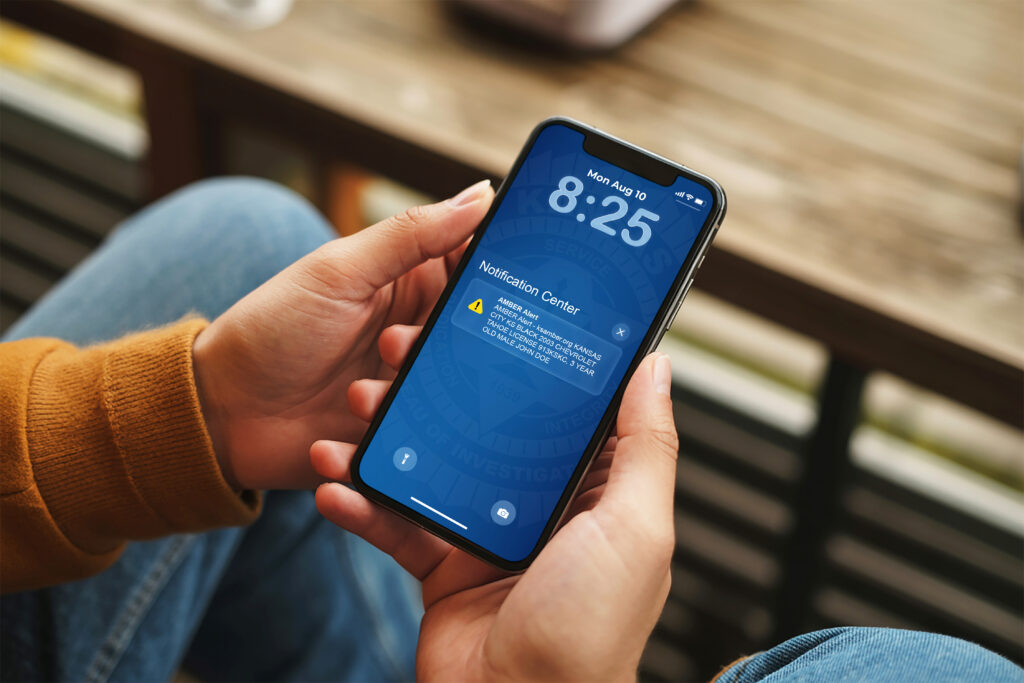
The Kansas Amber Alert program was established in 2002 to quickly mobilize citizens to contact authorities with helpful information in the event of a child abduction.
When Kansas has an active Amber Alert, information about the missing child will be posted at: Kansas Amber Alert.
If you are law enforcement and think you may have a child abduction, immediately call the KBI IT Service Desk to speak to a coordinator and start AMBER Alert activation.
AMBER Alert Criteria
The KBI uses the following criteria for AMBER Alerts, as recommended by the Department of Justice:
- There has been a child abduction
- The abducted child is 17 years of age, or younger
- There is reason to believe the victim is in imminent danger of serious bodily injury or death
- There is sufficient information to disseminate to the general public, which could assist in the safe recovery of the victim or the apprehension of a suspect
Frequently Asked Questions
What should I do if I see an abducted child, or suspect?
Call 911 immediately if you have seen a missing child, suspect, or suspect’s vehicle. If you have other information related to a missing child, call 1-800-KS-CRIME. Be prepared to provide details about what you observed.
What systems are activated during a Kansas AMBER alert?
Wireless Emergency Alerts (WEAs) are used during Kansas AMBER alerts. These are alerts received on cell phones and other mobile devices that are sent by government authorities during public safety emergencies such as severe weather, child abductions, or when evacuation is required.
The Emergency Alert System (EAS) is also used. This national public warning system is used by state and local authorities to deliver important emergency information, such as weather and AMBER alerts, to affected communities. EAS messages are transmitted by radio and television broadcasters, cable systems, satellite radio, and television providers.
Why did my cell phone not receive the AMBER alert?
The KBI is capable of issuing wireless emergency alerts statewide in Kansas, or only to a specific region or certain counties in Kansas where the incident took place. If you did not receive the alert, KBI may have not alerted your area. Additionally, to receive a WEA message, your device must be WEA-capable, switched on, not in airplane mode, and receiving service from a cell tower of a wireless carrier that participates in WEA.
Why aren’t AMBER alerts issued in more cases?
AMBER alerts are used only in the most critical incidents because overuse could harm the program. The effort is centered on quickly motivating the public to help locate the abducted child and suspect. If citizens experienced a major increase in alerts, they may turn off emergency alerts or disengage when help is needed most.
What should I do if my child is missing?
Call 911 immediately if you believe your child is missing or has been abducted. There is no waiting period to notify authorities of a missing child.
Who begins the AMBER alert process?
Local law enforcement must begin the AMBER Alert process. They will respond and gather facts about the incident. They will likely request a photo of the child and of the abductor if the offender is known. Law enforcement notifies the KBI who issues the alert.
Can AMBER Alerts be issued across state lines?
Yes. If the abductor is suspected of taking the child outside the jurisdiction of the issuing state, the AMBER Alert Coordinator contacts the coordinator in the state where the abducted child is believed to be, and requests the alert be extended into that state.
Why does my phone or device continue to broadcast the AMBER alert even after the event has ended?
At times, cellular providers have not configured their alerting equipment properly in order to cancel the alert. Try restarting your device, as this can sometimes clear the WEA message. Also, report the issue to your wireless provider.